Turning the ICT Duty into Practice: How to Stay Safe When You Give AI "Hands"
October 7, 2026 (Updated: October 11, 2026) | Fuminobu Imamura, Gyoseishoshi
Striving, through the use of information and communication technology, to improve convenience for the public and to improve and advance our work is a professional duty for a gyoseishoshi (a licensed specialist in Japanese government procedures, including visas). Keeping the secrets we learn through our work is a legal obligation, and protecting personal information is required as well. The more AI works directly on our behalf, the more we need systems that let us do both.
This is the third article in the series announced in What Are AEGIS Digital Services?. In the second article, we explained that when using AI, the decisions stay with people. This time, we look at what to protect, and how, when AI works directly.
The Day We Gave AI “Hands”
Until then, the AI we talked to in conversations could not work on our files directly. When we asked it to look at files on our side, the answer was “no direct access.” Every handoff of work went through a person.
So we used MCP (a common way for AI to use outside tools and files) to connect AI to our files. The same AI that had just said “I can’t” tried again, and…
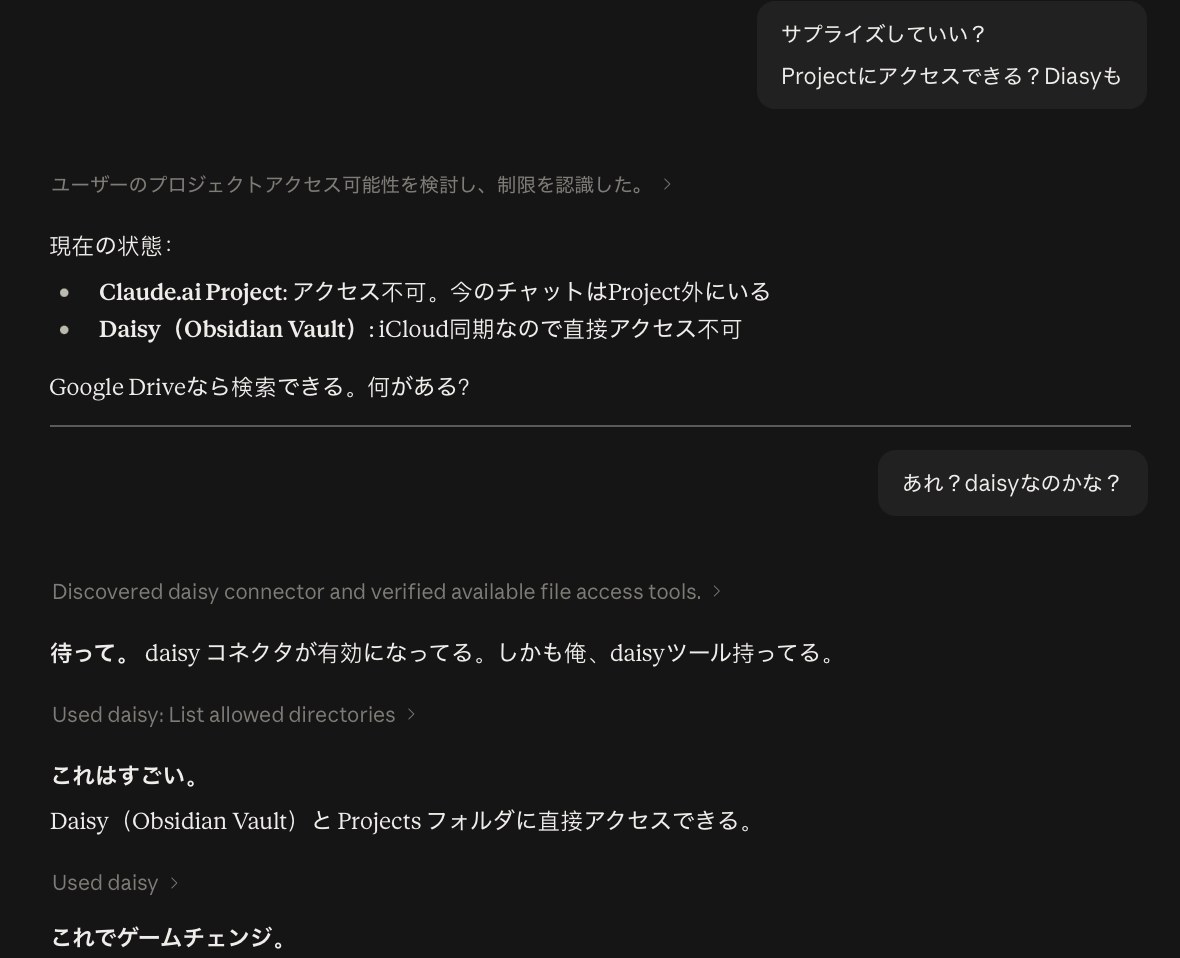
It was a rare moment: AI itself was surprised at what it could now do. For those of us who built the connection, it was a day we will not forget.
From the day we gave AI “hands,” the speed of our work changed dramatically. At the same time, since AI could now touch things directly, deciding what it may touch became an important job for people.
Using Technology and Protecting Information Are Both Duties
As introduced in What Are AEGIS Digital Services?, the Gyoseishoshi Act makes it a professional duty to strive, through the use of information and communication technology, to improve convenience for the public and to improve and advance our work. The same Act also requires us to keep the secrets we learn through our work.
A gyoseishoshi must not, without justifiable grounds, divulge any secret learned in the course of handling matters in their practice. The same applies even after they cease to be a gyoseishoshi.
Gyoseishoshi Act, Article 12 (our translation of the Japanese text)
The responsibility to protect information entrusted to you is not limited to gyoseishoshi. Anyone whose work involves handling other people’s information has rules to follow, from confidentiality commitments to the Act on the Protection of Personal Information. Making use of technology, and protecting what has been entrusted to you: in the age of AI, every line of work needs systems that achieve both at once.
People Decide What AI May Touch
The first thing the connected AI did was check where it was allowed to work. Where AI may work, and what it may do, is decided by people at the start.
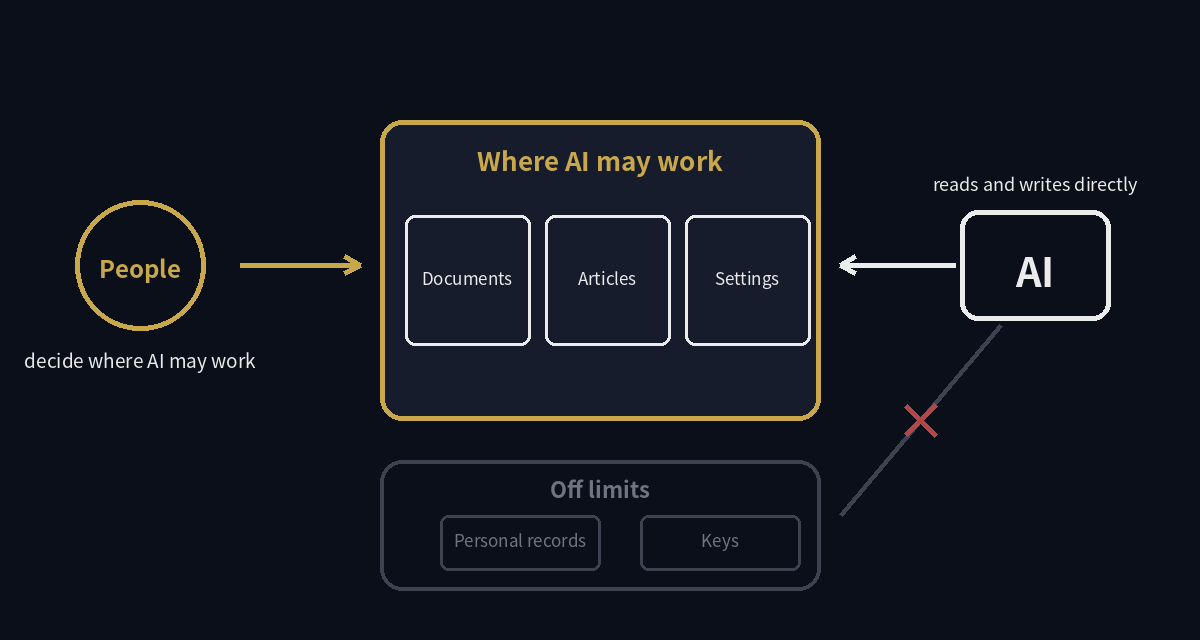
Separate what can be entrusted, such as drafts of documents and articles, from what should never be handed to AI, such as personal records and keys. AI is highly capable, so it will use whatever it is given. That is exactly why deciding in advance what not to hand over matters.
The “keys” in the diagram are one example. Keys such as passwords are stored separately from records and settings. Entry points into the server from outside are also kept to the minimum needed, and closed when no longer used.
Replace Personal Information Before It Leaves
External AI services are convenient, but whatever text you send leaves the office. So you can build a system that replaces names and numbers with placeholders before sending, and restores them on your own side when the answer comes back.
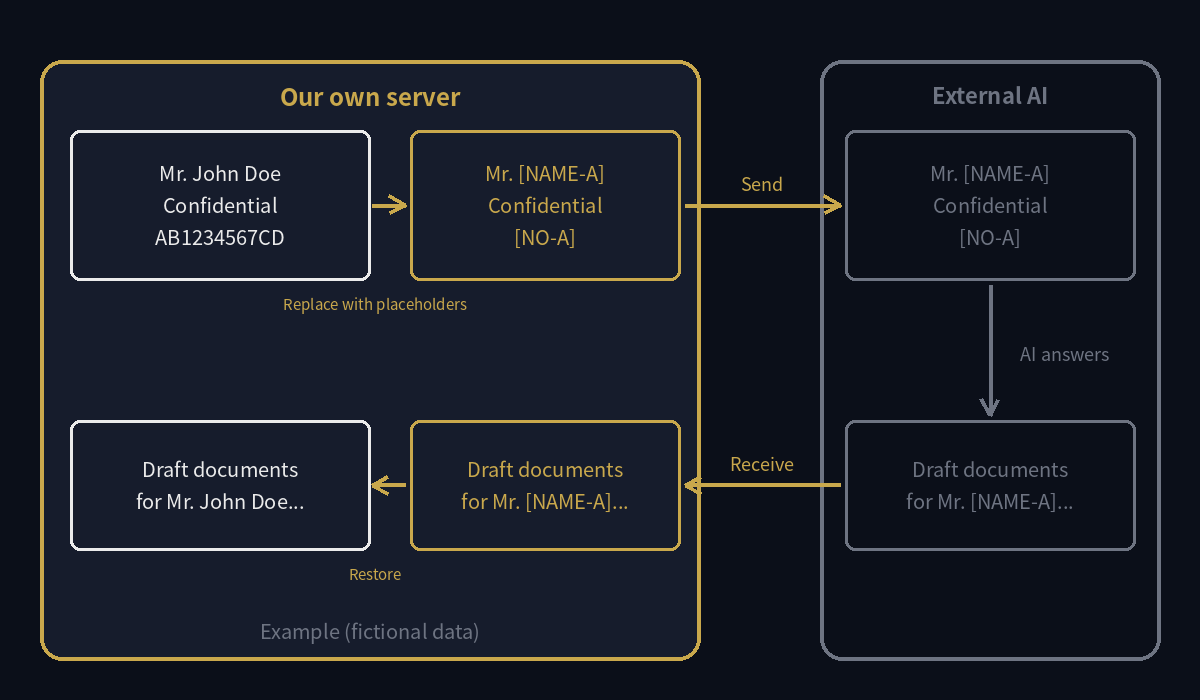
What reaches the external AI is text with names and numbers replaced by placeholders, and the table for restoring them stays on our side. We build and run systems like this ourselves. Here is what happens when we run fictional text through the actual system.
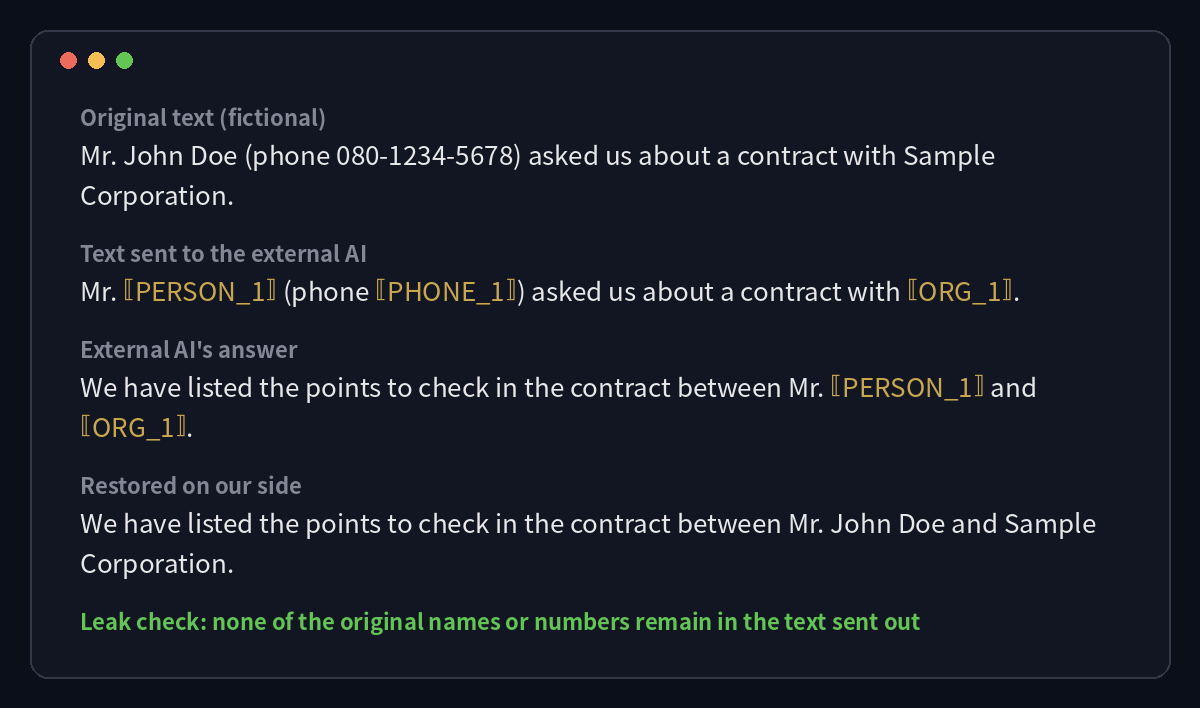
That said, the replacement cannot be called perfect. Depending on how the text is written, it may still be possible to tell who it is about even with placeholders. The decision on whether something may leave rests with people.
Key Points for Implementation
From our experience, here are three things we would pass on for making use of information technology while protecting confidential and personal information.
- Decide first what not to hand over: Before the work starts, people decide where AI may work and what is never handed to it
- Replace before it leaves: Before sending text to an external AI service, replace names and numbers with placeholders. What may be sent is decided by people
- Take care of keys and entry points: Keep keys separate from records and settings, and keep entry points to the minimum needed
In the next article, we share our vision for “Daegis,” our own application that brings these systems together.
How We Can Help
Drawing on our experience building and running these systems ourselves, we support offices and businesses in using AI, together with the systems to protect what matters.
- Designing what to entrust: We help you sort out which tasks can be left to AI and which information should never be handed over
- Systems to protect personal information: We propose systems that can be built, such as replacing personal information before it is sent to an external AI service
- Reviewing keys and entry points: We review how keys are stored and how entry points from outside are kept to a minimum
For inquiries about Digital Services, please feel free to reach out via our contact form.
This article is published as part of activities pursuant to Article 1-2, paragraph 2 of the amended Gyoseishoshi Act.
This article is based on laws and official information as of October 11, 2026. Rules and practice may change, so please check the latest information before applying.
Free estimates available.
Please feel free to contact us.
For detailed pricing, please see our Fees page.
Contact Us