Basic Guide to Applying for a Work Visa in Japan
August 27, 2025 (Updated: October 16, 2026) | Fuminobu Imamura, Gyoseishoshi
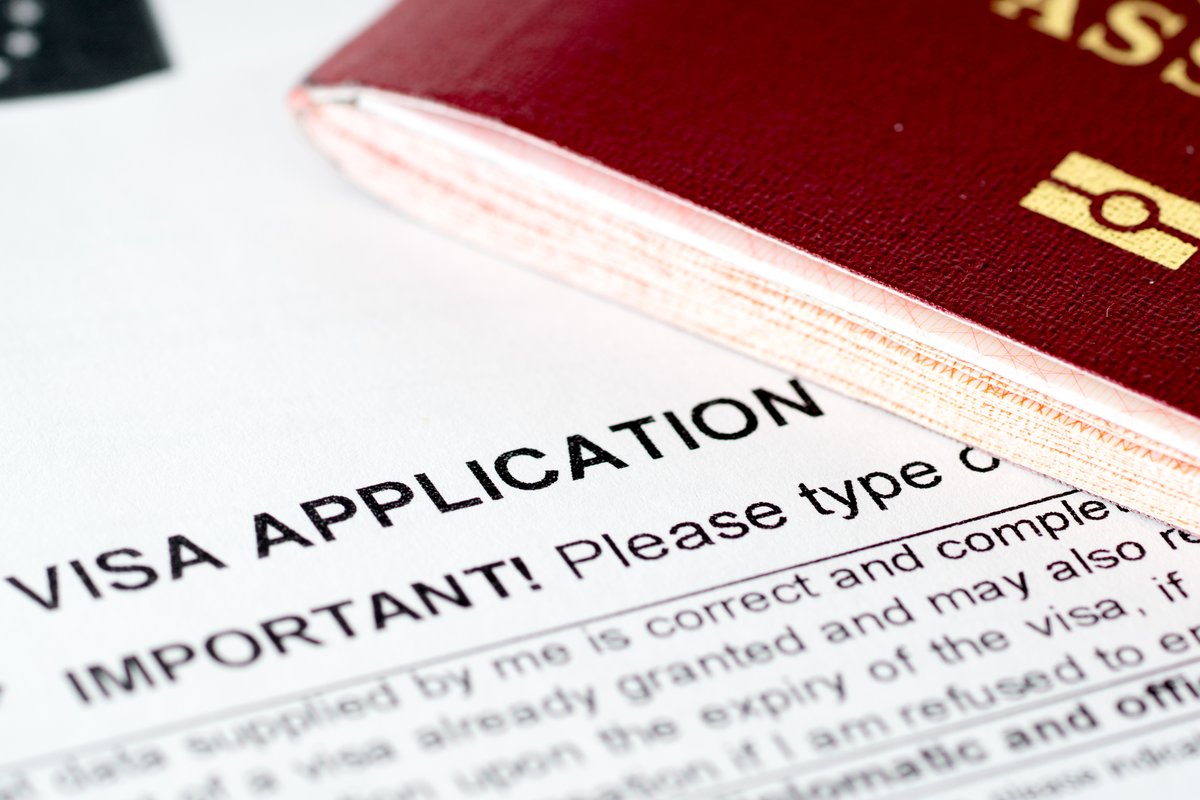
There is no single “work visa” in Japan. Foreign nationals must obtain a specific status of residence that matches their intended activities, such as Engineer/Specialist in Humanities/International Services, Business Manager, or Specified Skilled Worker. Each of these has its own set of requirements.
Basic Knowledge of Work Visas: Application Conditions and Required Documents
What Is a Work Visa?
The main work-related statuses of residence include Engineer/Specialist in Humanities/International Services, Business Manager, Skilled Labor, and Specified Skilled Worker.
For example, the Engineer/Specialist in Humanities/International Services visa applies to those working as interpreters or translators, in trade, or as mechanical engineers or programmers, while the Business Manager visa applies to those establishing and managing a company in Japan.
Criteria for Work Visa Approval
In the examination of a work visa application, the following three points are mainly checked:
- Eligibility for the status of residence: The activity that the applicant intends to carry out in Japan must fall under one of the statuses of residence stipulated by law.
- Conformity with the landing permission criteria: The applicant’s academic background, work experience, skills, etc. must conform to the criteria set by Ministry of Justice ordinance.
- Reasonableness: For a change of status of residence or an extension of the period of stay, there must be “reasonable grounds to find the change or extension appropriate” (Immigration Control and Refugee Recognition Act (ICRRA), Article 20, Paragraph 3 and Article 21, Paragraph 3). Factors such as conduct and the fulfillment of tax and notification obligations are considered (Immigration Services Agency, “Guidelines for Permission for Change of Status of Residence and Extension of Period of Stay”, in Japanese).
For example, under the landing permission criteria for the Engineer/Specialist in Humanities/International Services status (Ministerial Ordinance on Criteria for Landing Permission), engineering and humanities work in principle requires that the applicant has majored in a subject related to the work and graduated from a university (or received equivalent education) or completed a specialized course at a specialized training college in Japan; otherwise, 10 or more years of practical experience is required. International services work, such as translation, interpretation, language instruction, public relations, advertising, or overseas trade, in principle requires three or more years of practical experience in related work, but this experience is not required for university graduates engaged in translation, interpretation, or language instruction.
Necessary Documents
The documents required depend on the status of residence and on the category of the employing organization. The following is an example for the Engineer/Specialist in Humanities/International Services status.
There are four categories, ranging from Category 1 (listed companies, national and local governments, etc.) to Category 4 (organizations and individuals that do not fall under Categories 1 to 3). The following documents are required in every category:
- Application form: Application for Certificate of Eligibility or Application for Change of Status of Residence
- Passport and residence card, presented at the counter (if already in Japan)
- Photograph (4 cm high × 3 cm wide, taken within six months before submission; Immigration Services Agency, “Photo Specifications”, in Japanese)
- Self-addressed stamped envelope (if applying for a Certificate of Eligibility)
- Documents proving the category (e.g. a document proving the company is listed, or a copy of the previous year’s summary of statutory records on employees’ withholding tax on salaries; if no such document can be submitted, the organization falls under Category 4)
For Categories 1 and 2, other documents are in principle not required. For Categories 3 and 4, documents relating to the applicant and the employing company are also required:
Documents relating to the applicant:
- Resume (stating the organizations worked for, the work done, and the periods)
- Documents proving academic background or work experience (e.g. university graduation certificate, certificate of employment)
- If the applicant will mainly use language skills in their work, such as translation, interpretation, or customer service: documents proving ability equivalent to B2 of the Common European Framework of Reference for Languages (CEFR) in the language used at work (for applications from April 15, 2026)
Documents relating to the employing company:
- Certificate of registered matters (company registration)
- Materials showing the business (e.g. a company brochure)
- A copy of the financial statements for the most recent fiscal year (a business plan for a new business)
- A document stating the working conditions (e.g. a notice of employment terms)
- A declaration concerning the representative of the employing organization (for applications from April 15, 2026)
The definition of each category and the full list of documents are set out on the Immigration Services Agency page for the Engineer/Specialist in Humanities/International Services status (in Japanese).
Practical Points: Common Mistakes and Countermeasures
Misunderstanding of Eligibility for Status of Residence
A common misconception is that a work visa can be obtained simply because the applicant can speak Japanese or is a foreign national. In reality, what matters is the relationship between the applicant’s academic and work history and the work they plan to do in Japan.
Countermeasures: Before applying, it is important to analyze in detail the relationship between the applicant’s academic and work history and the planned work, so that you can clearly explain why the work falls under the status of residence. In particular, be sure to prepare materials that clearly show the relationship between the applicant’s major and the work.
In addition, under Engineer/Specialist in Humanities/International Services, where the work mainly involves dealing with people using language ability, such as translation, interpretation, or hotel front desk work, the applicant is expected to have language ability equivalent to B2 on the CEFR in the language used at work. Without this ability, the work is not recognized as reaching the level required for this status (Clarification Guidelines, Appendix 4 (Japanese)). This applies regardless of the accepting organization’s category: documents proving the ability must be submitted in Categories 3 and 4, and may also be requested during the review in Categories 1 and 2. For Japanese, the ability is recognized through, for example, JLPT N2 or higher or a score of 400 or more on the BJT Business Japanese Proficiency Test; for other languages, through the language being the applicant’s native or official language, among other ways.
Incomplete or Insufficient Documents
Incomplete or insufficient documents are another point to watch in work visa applications. In particular, certificates issued by foreign universities or companies may differ from the format required by the Immigration Services Agency.
Countermeasures: We recommend that you have your documents checked by a specialist before you apply, and prepare any supplementary materials or explanatory documents as necessary. Documents written in a foreign language must be accompanied by a Japanese translation.
Insufficient Proof of the Stability and Continuity of the Company
Small companies and companies that have only recently been established in particular may not be able to sufficiently prove the stability and continuity of their business.
Countermeasures: It is important to submit not only financial statements, but also copies of business contracts, business plans, income and expenditure plans, etc., and to gather evidence that shows that the company’s business will continue to be stable.
Lack of Communication Due to Language Barriers
If a foreign national who is not fluent in Japanese tries to fill in the application form by themselves, it is easy to make mistakes or leave things out, which could have a negative impact on the application.
Countermeasures: By receiving support from an expert who can communicate effectively in English, it is possible to convey accurate information and prepare appropriate documents. In particular, it is important to accurately convey the applicant’s intentions in explanatory documents such as a statement of reasons for employment.
How We Can Help
Our office, based in Minato Ward, supports foreign nationals applying for work visas. We can assist you from checking the application conditions to preparing the necessary documents, creating the application form, and submitting it to the Immigration Services Agency. We work in English, so please feel free to consult us without worrying about language barriers.
This article is based on laws and official information as of October 16, 2026. Rules and practice may change, so please check the latest information before applying.
Free estimates available.
Please feel free to contact us.
For detailed pricing, please see our Fees page.
Contact Us